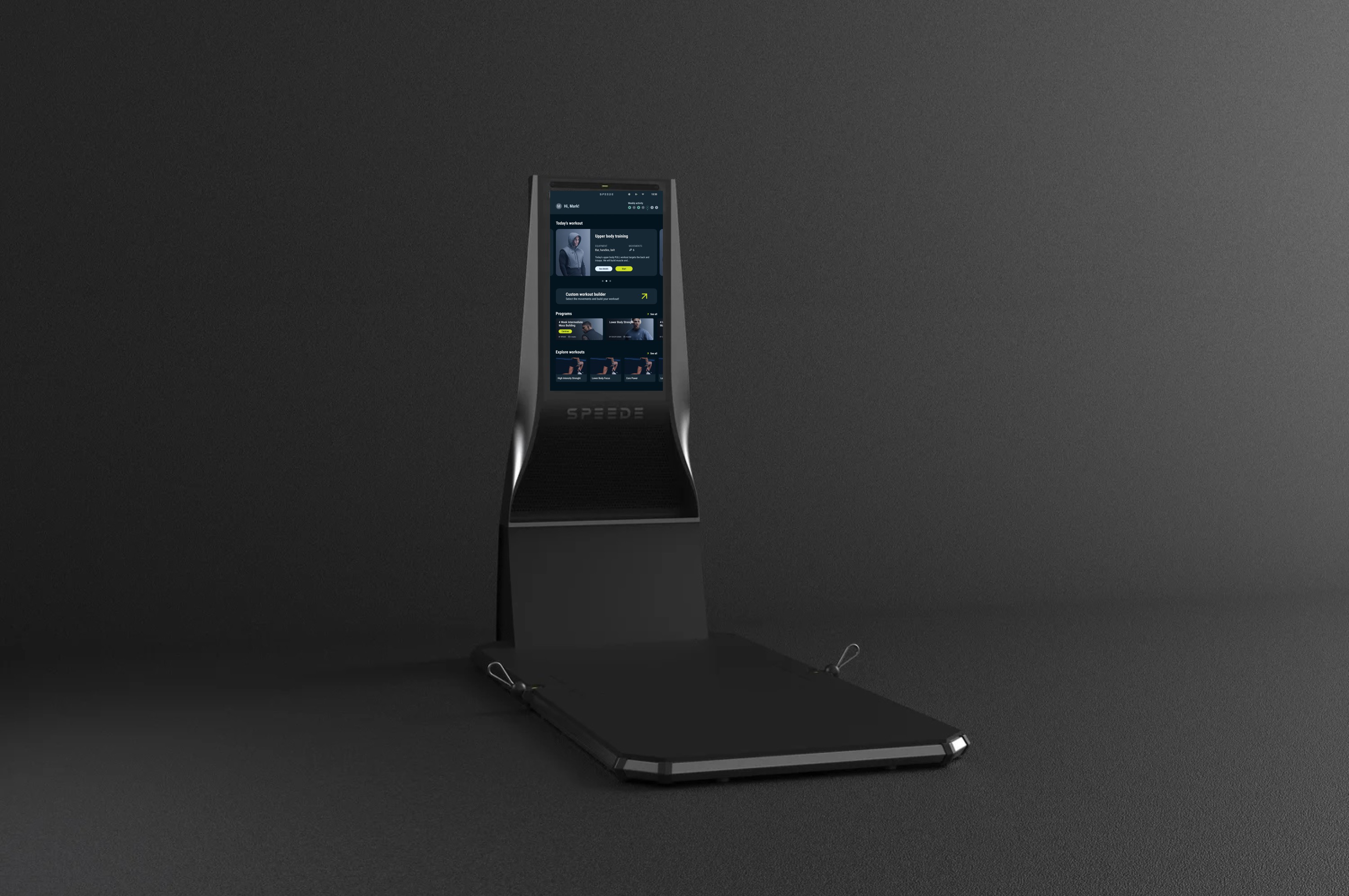
Speede is a next-generation strength training machine that combines AI with isokinetic and eccentric training principles to deliver the world’s most efficient resistance workouts. Ahead of its MVP launch, the product needed a digital workout experience that could make this complex technology intuitive, demo-ready, and investor-ready.
The team already had an initial version of the UI, but it wasn’t fully working. Our goal was to refine the interface, design the end-to-end workout flow, and ensure the product could clearly communicate its value to athletes, investors, and early users.
Challenge
Launching the MVP came with several hurdles. The interface needed to unify the experience across hardware and software while clearly communicating the machine’s advanced capabilities. We had to work within an existing design system, improving usability and flow without redoing visual assets. Timelines were tight, with pressure to deliver a fully functional MVP quickly, and working remotely from Uruguay without access to the physical machine made testing and ergonomic validation particularly challenging. Success meant creating a user experience that was intuitive, visually consistent, and aligned with hardware constraints.
Approach
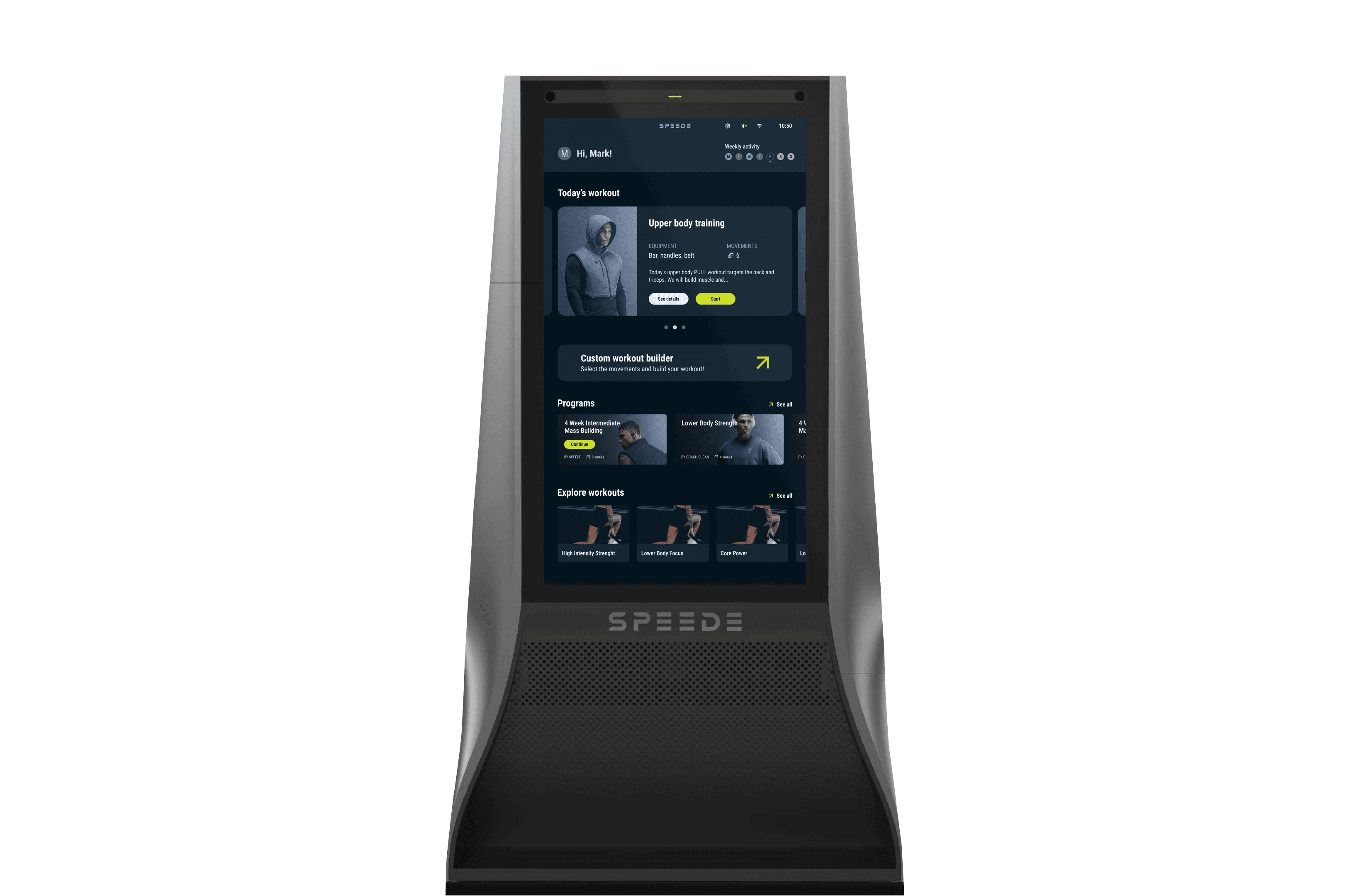
As part of the Product Design team at SweatWorks, we focused on simplifying complexity while maintaining the visual and functional integrity of the product. The redesign included a clearer onboarding and login flow, a custom workout builder for goal-driven sessions, pre-built programs for specific objectives, educational content to help users understand modes, and AI-driven real-time feedback to guide performance. The goal was to make a highly technical product feel approachable and usable in minutes, even for first-time users, while maintaining credibility for investor pitches and live demos.
Collaboration & impact
The MVP was a cross-disciplinary effort across Product Design, industrial design, engineering, software development, and project management. It successfully supported hands-on demos at industry events, helped athletes, investors, and media experience the product firsthand, helped secure $2.5M in seed funding, generated early traction and media attention, and contributed to athlete partnerships. The MVP ultimately played a key role in Speede being acquired by Hydrow, a leading connected fitness company, validating the importance of a clear, user-centered digital experience in communicating value for a highly technical hardware product.
Learnings
Designing a hardware-integrated product without direct access to the machine required creative collaboration and reliance on remote feedback. Starting without clear research or direction highlighted the importance of upfront alignment on goals and priorities. Balancing usability, ergonomics, and visual consistency under tight timelines reinforced how subtle, thoughtful design improvements can have a big impact.
